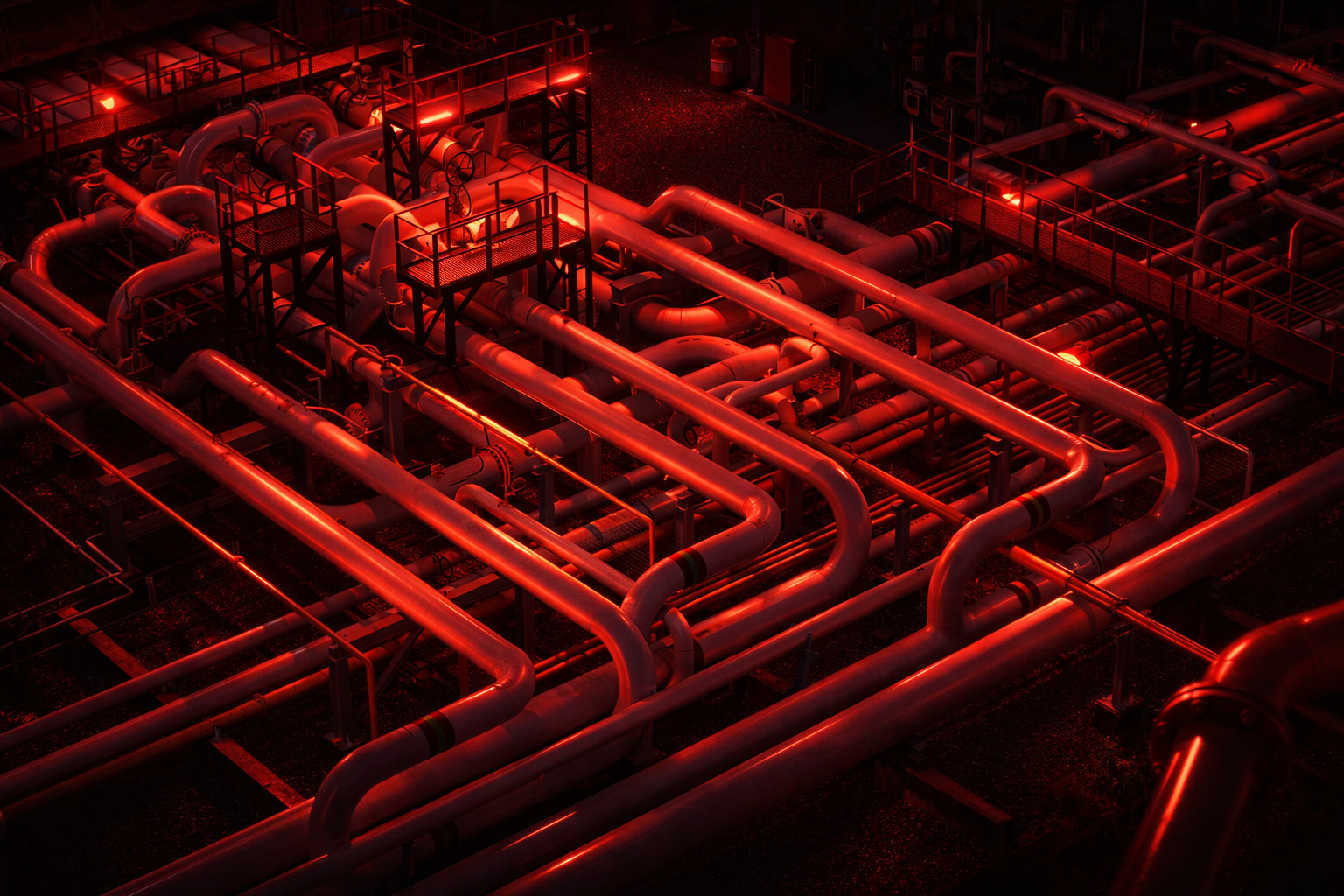
In industrial piping systems, fittings are often perceived as secondary components compared to pipes, valves, or equipment. In reality, elbows, reducers, and caps play a decisive role in the overall safety, efficiency, and durability of a piping installation. Their geometry, material quality, and compliance with standards directly influence flow behavior, pressure losses, mechanical stress, and long-term reliability.
Every change in direction, diameter, or pipe termination introduces localized stress and flow disturbance. Poorly designed or improperly selected fittings can lead to increased pressure drop, turbulence, vibration, fatigue, and, in extreme cases, premature failure of the system.
Carbon steel fittings are specifically engineered to manage these effects while maintaining structural integrity under demanding operating conditions.
Elbows and reducers strongly influence how fluids behave inside a pipeline. Long radius elbows reduce turbulence and pressure loss compared to short-radius alternatives by allowing smoother directional changes. Reducers, when correctly selected, ensure gradual flow transitions that prevent separation, recirculation zones, and energy losses.
These characteristics are especially important in systems operating under continuous flow, high pressure, or elevated temperatures, such as oil & gas, power generation, chemical processing, and industrial utilities.
Carbon steel fittings are designed to withstand internal pressure, thermal expansion, and external mechanical loads. Their geometry ensures uniform stress distribution, reducing localized concentration points that could lead to cracking or deformation.
Caps, for example, use a dished profile to distribute pressure evenly across the surface, improving resistance and extending service life.
Carbon steel offers an optimal balance between mechanical strength, weldability, availability, and cost efficiency. It performs reliably across a wide temperature and pressure range and is fully compatible with international standards such as EN 10253-2 and ASME B16.9.
In demanding piping systems, the quality and design of fittings are just as important as pipes themselves. Properly engineered carbon steel elbows, reducers, and caps contribute directly to system safety, operational efficiency, and long-term performance. Choosing compliant, well-designed fittings is not a cost—it is an investment in reliability.